



· Yogesh Khedar· Industry· 12 min read
One Drone Network for the Whole City
Every city department wants a drone, and every one of them buys its own. A shared network of docks and hubs, run as a service, inspects, watches and delivers for all of them, and it needs more skilled people, not fewer.
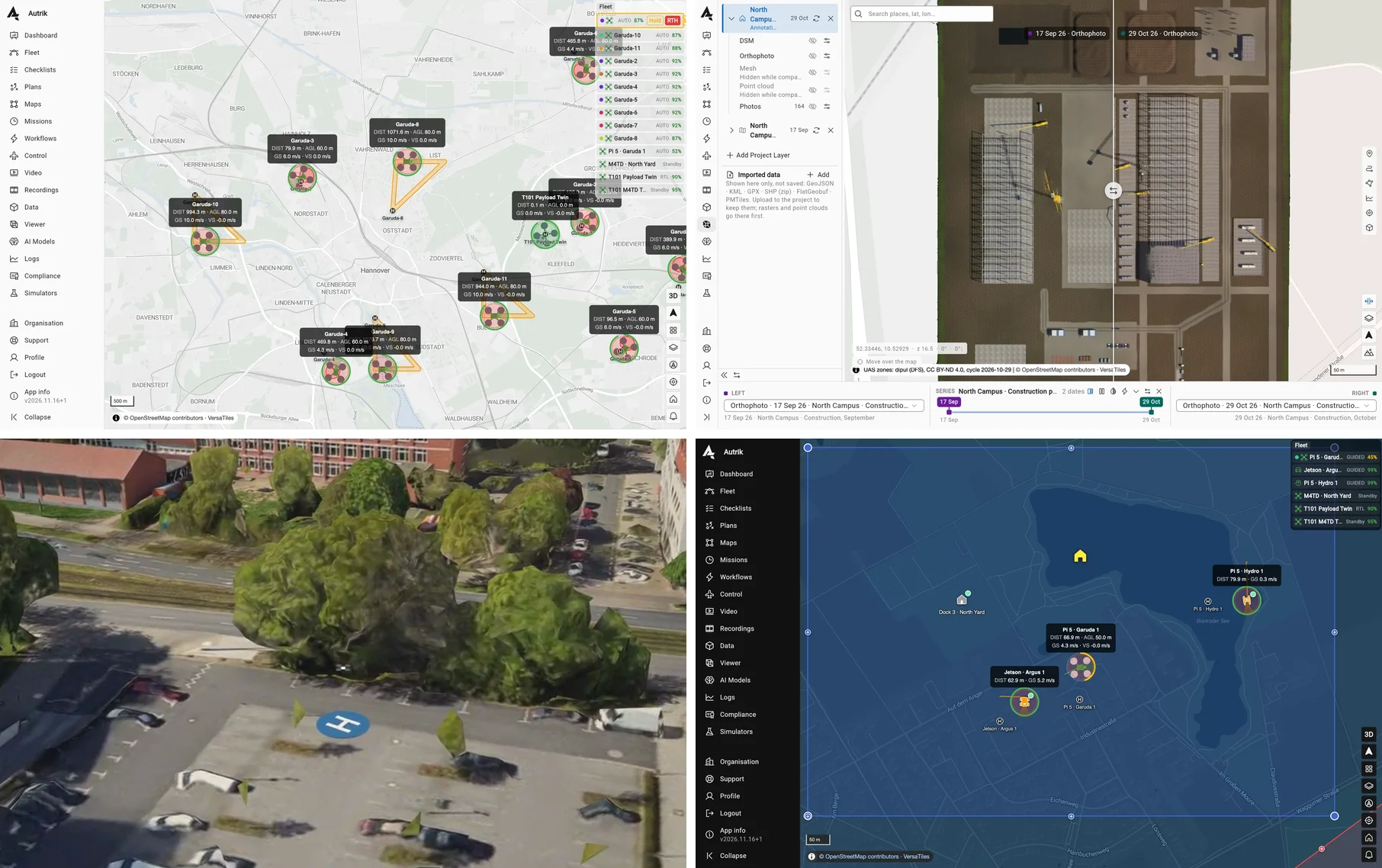
Walk through a mid-sized European city and count who would like a drone. The bridge office wants the underside of the river crossing looked at. The utility wants the substation and the overhead lines. The fire service wants eyes on a roof before the first truck turns the corner. The police want the same at a traffic accident. The parks department wants to know which trees came through the storm. The hospital wants its lab samples across town in eight minutes, not forty. The water company wants the reservoir, the environment office wants the air over the industrial estate, and the planning office wants the building site it approved last spring, photographed every Monday.
Today each of them buys its own drone, trains two of its own staff, and flies a few hours a month. The aircraft spends most of its life in a case. The pilots lose currency between flights. Nobody shares a map, a log or a lesson.
There is a better shape for this, and the delivery operators have already shown it works: one drone network over the city, run as a service, used by everyone. Docks on rooftops and depots, a few delivery hubs, one operations centre, and every department buying flights, not aircraft.
This post makes the case in three parts: what the network does, what Zipline teaches about running one, and what it means for the people who work in it.
What one network does
A city network is not one application. That is the point. The same docks, the same aircraft types and the same operations centre serve three kinds of work, and each fills the hours the others leave empty.
Watch: inspection and monitoring
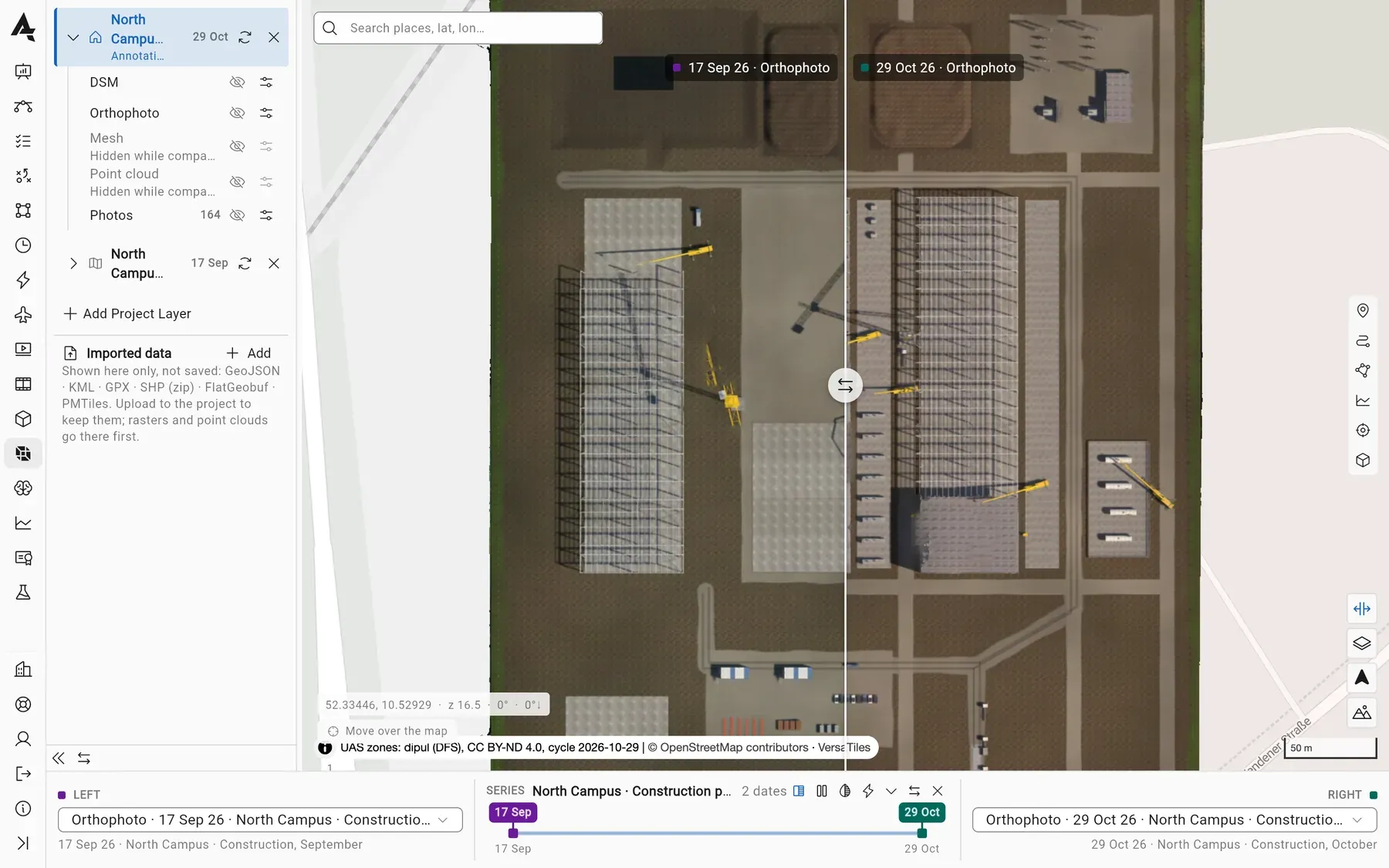
Most of what a city owns is outdoors, ageing and hard to reach. All of it can be looked at from the air on a schedule, and the schedule is where the value is: the second picture of the same crack is worth more than the first.
- Bridges and tunnel portals: decks, bearings, joints and undersides, flown on the same lines each quarter so the change shows up, not just the state.
- Power, gas and district heating: overhead lines, substations, pipeline corridors, thermal leaks from heating networks on a cold night.
- Rail and tram: catenary, track geometry, vegetation encroaching on the line, storm damage before the first train of the morning.
- Roofs and public buildings: schools, pools and halls, solar panels with hot spots, flat roofs holding water after rain.
- Water: reservoirs, river banks and flood defences, outfalls, algae blooms, the level of the river during the night of a flood.
- Trees and parks: canopy health, storm damage, the one tree leaning over a playground.
- Construction and planning: progress against the approved plan, volumes on the spoil heap, the measured as-built instead of the claimed one.
- Air and noise: gas and particulate sensors flown along the industrial estate or the motorway, at the height where the plume actually is.
- Traffic and events: congestion, a crowd at the station after a match, the queue on the ring road after an accident.
Each of these is a few flights a month for one department, which is why one department cannot justify a drone program for it. Together they are hundreds of flights a week, and that is a network.
Respond: the minutes that matter
A dock that inspects a roof at 10:00 can be over a road accident at 10:03. Drone as first responder is the most time-critical work a city network does, and it rides on the same infrastructure: an alarm or a call comes in, the nearest dock launches, and the live picture is in the control room before the first vehicle arrives. Fire on a roof, a missing person near the river, a gas smell reported in a street, a chemical alarm at a plant: in each case the first few minutes decide what gets sent and how.
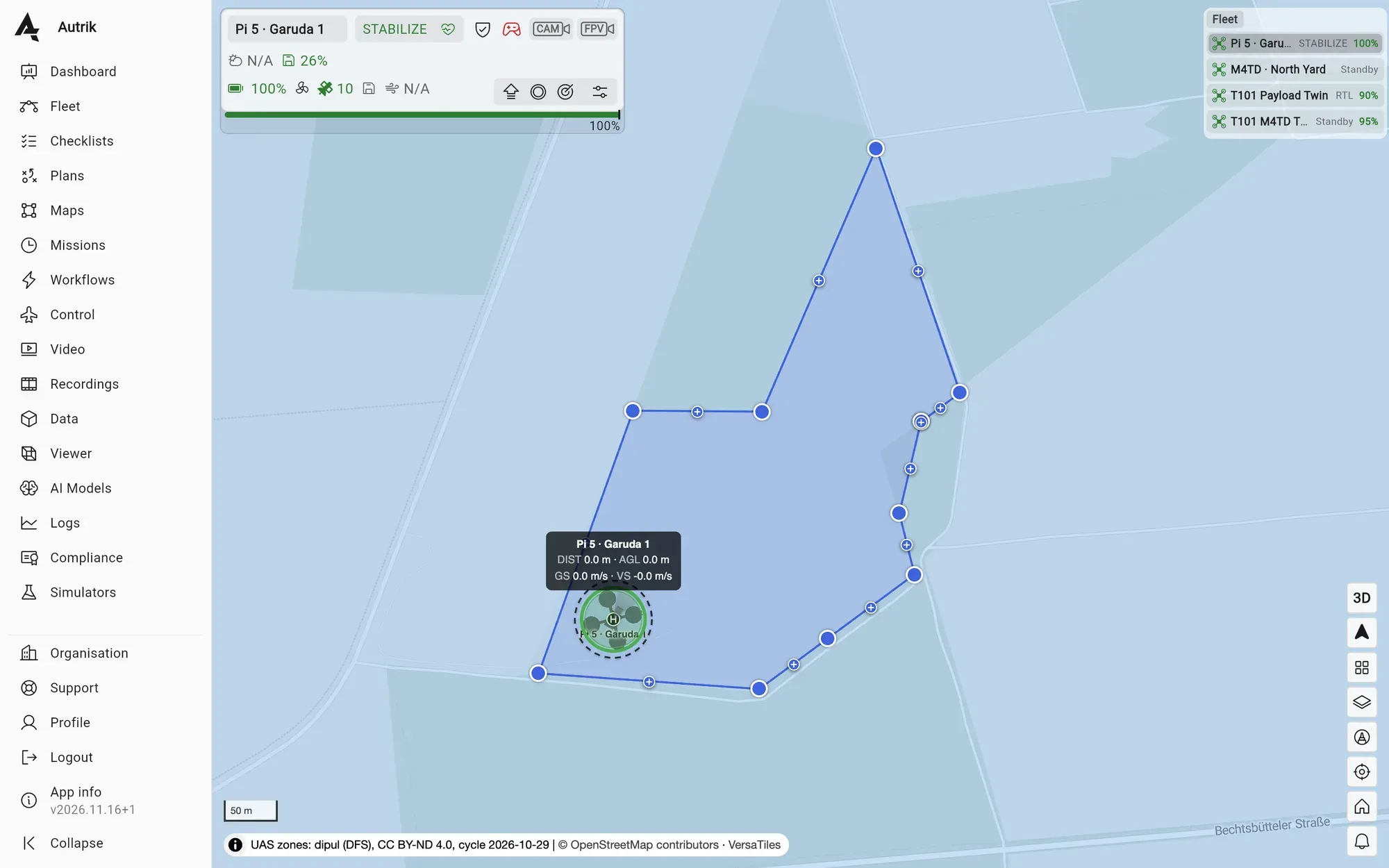
Response flights always pre-empt the schedule. Inspection waits; it was flexible by design. That priority rule is one of the first things a shared network has to write down, and one of the first things a single-department program never has to think about.
Carry: delivery for the city’s own needs
Delivery is where the network earns its daily rhythm, and it starts not with pizza but with the city’s own logistics:
- Hospitals and labs: blood products, samples and urgent medicines between hospitals, labs and clinics. A sample that waits for the next courier round waits hours; a drone takes minutes.
- Pharmacies and care homes: prescriptions to people who cannot easily collect them.
- Spare parts: the one part a tram depot, a pumping station or a field crew needs now, instead of a van crossing the city for a box the size of a shoe.
- Documents and keys: between the town hall, the courts and the field offices, still a surprising amount of daily traffic.
- Emergency kit: a defibrillator, a flotation device, a first-aid pack to the scene, dropped before the ambulance arrives.
- Retail and food, later, when the network is proven and the residents have agreed to it, not first.
Delivery fills the middle of the day; inspection fills the mornings and the quiet hours; response cuts across both. One dock, three kinds of work, and the aircraft spends its life flying instead of in a case.
What Zipline teaches about running a network
Zipline is the clearest proof that a drone network can run at scale. It started in 2016 delivering blood in Rwanda, flies national networks there and in Ghana, and in January 2026 reported more than two million commercial deliveries and over 125 million autonomous miles, with expansion into US cities such as Dallas, Houston and Phoenix. Those are Zipline’s own numbers. The interesting part is not the aircraft. It is the operating principle behind it.
1. The network is the product, not the drone
Zipline’s first system, a fixed-wing aircraft launched from a catapult that dropped its package under a paper parachute, was built around a hub and spoke: one distribution centre, a large radius, many destinations. The newer urban system goes further. The aircraft charges and loads at a dock, flies high and quiet, and does not land at the customer at all: it hovers well above the garden or the hospital forecourt and lowers a small delivery unit on a tether, which steers itself onto a spot the size of a table. The aircraft never comes down among people, children or dogs.
The lesson for a city is the order of design: decide where the hubs and docks go, what each one covers, how a package or a picture moves through the system, and only then which aircraft serve it. A department that buys a drone first and looks for missions second has done it backwards.
2. One person supervises many aircraft
A remote pilot’s reaction comes a fraction of a second too late for most things that go wrong in flight. So at network scale the aircraft must notice and act on its own, and the human supervises: approves, prioritises, handles the exception, talks to the hospital or the air-traffic controller. That is the only arrangement in which the economics work. One pilot per aircraft is a helicopter’s cost structure in a drone’s body.
It is also the arrangement regulators can approve, if the evidence is there: who was responsible for which aircraft at which moment, what the aircraft did on its own, and what the supervisor decided.
3. The safety record is a test system
Zipline talks about its safety record as the result of layered testing: millions of hours in simulation, hardware-in-the-loop rigs for every component, and only then real flights. The limits of the aircraft are found in test so that operations never come near them. Wind, icing, battery reserve and terrain become operating rules the system enforces, not emergencies a pilot handles. Every near miss is studied until it cannot happen again.
A city network needs the same discipline even if it buys its aircraft: every mission rehearsed in a simulator of the real city before it flies, every flight logged and compared with the fleet’s baseline, every crew trained on the faults they hope never to see.
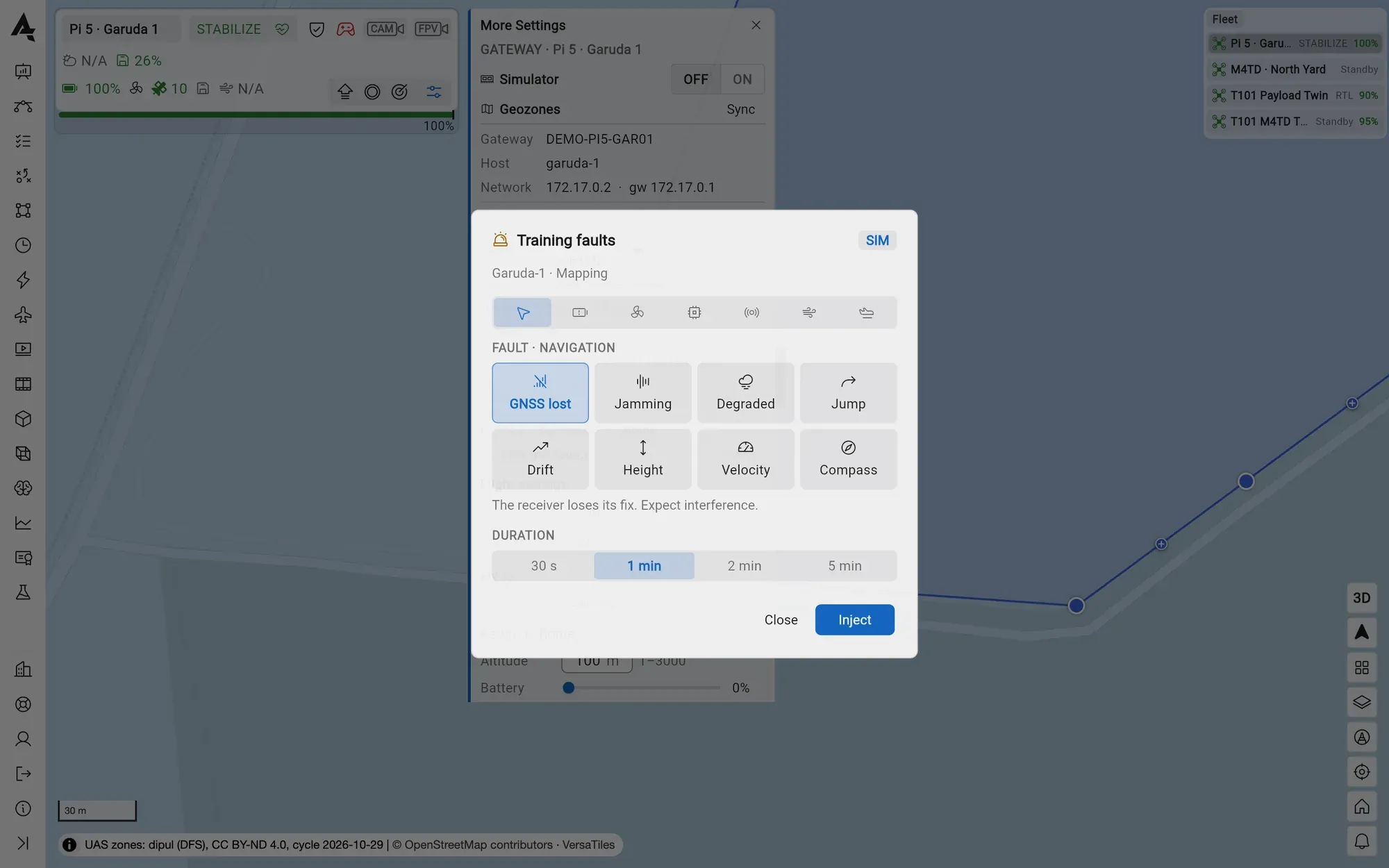 The aircraft is bought; the safety record is built.
Why it does not remove people
The easy story about drones over a city is that they replace people: the courier, the inspector on the rope, the patrol car. The real story is different, and it matters, because a city network only gets built if the people who work in the city want it.
The work moves; it does not disappear. A network of fifty aircraft needs people at every layer, and most of these jobs do not exist today:
- Network supervisors in the operations centre, each watching several aircraft, taking the exceptions, talking to the control room and air traffic. Many of them are today’s drone pilots, and some of them are today’s dispatchers, who already know how to keep many things moving at once.
- Field technicians who keep docks, batteries, motors and payloads healthy, reading the fleet’s health data to replace a part before it fails rather than after.
- Hub crews who load, receive and hand over: the pharmacy technician who packs the medicine, the lab assistant who receives the sample. Today’s couriers are well placed for this; they already know the city and its customers.
- Inspectors who still inspect, but from the data first: they look at the same bridge joint across eight quarters on a screen, and climb or abseil only when the picture says it is worth it. Fewer hours on the rope, more hours on the judgement only an engineer can make.
- Analysts who turn the flights into answers: the tree survey, the roof report, the progress against the plan, the air-quality map.
- Airspace and safety staff who plan corridors, coordinate with the airport and the police helicopter, write the operating rules and own the record.
Reskilling is the plan, not the afterthought. The people who already know the city, its bridges, its streets, its emergencies, are the best people to run its network. A dispatcher can learn to supervise aircraft faster than a drone specialist can learn the city. A field electrician can learn to maintain a dock. An inspector who flies the data before the rope does better inspections. Training, certification and practice in simulation, with real faults injected, are what turn them into the network’s crew, and the city that budgets for that alongside the docks gets a network its staff trust.
And the work gets safer. Fewer people on ropes under bridges, on roofs in the wind, on the track at night, or driving at speed to find out what is going on. That is not a side benefit. For many of the people involved it is the main one.
The arithmetic, roughly
A sketch, not a quote, for a city of half a million people on about 200 square kilometres:
- Watch and respond: docks every three to four kilometres, so any point is a few minutes’ flight away. Something like 15 to 25 docks, on rooftops of fire stations, depots, hospitals and public buildings the city already owns.
- Carry: two or three delivery hubs at the hospitals and the logistics centre, with landing or tether points at the clinics, labs and pharmacies they serve.
- One operations centre, staffed around the clock, with supervisors who each oversee several aircraft.
A department drone flies perhaps a hundred or two hundred hours a year. A dock on a shared network, flying inspections in the morning, deliveries at midday and responses whenever they come, can fly many times that. The cost of the aircraft, the crew, the training and the paperwork is spread across every department that uses it. Each department pays for flights and answers, and the city pays once for the airspace work, the approvals and the operations centre, instead of every office doing it badly on its own.
That is the same shift cities made long ago for water, power, buses and broadband: stop letting each office build its own, and run one network well.
What has to be true
Three things decide whether a city network flies or stays on a slide:
- Approval to fly beyond line of sight over people. In Europe that means the specific category, a SORA for each kind of operation, and U-space airspace where traffic is dense. The evidence for it, the procedures, the training, the record of every flight, is work, and it is the same work for every department, which is another reason to do it once.
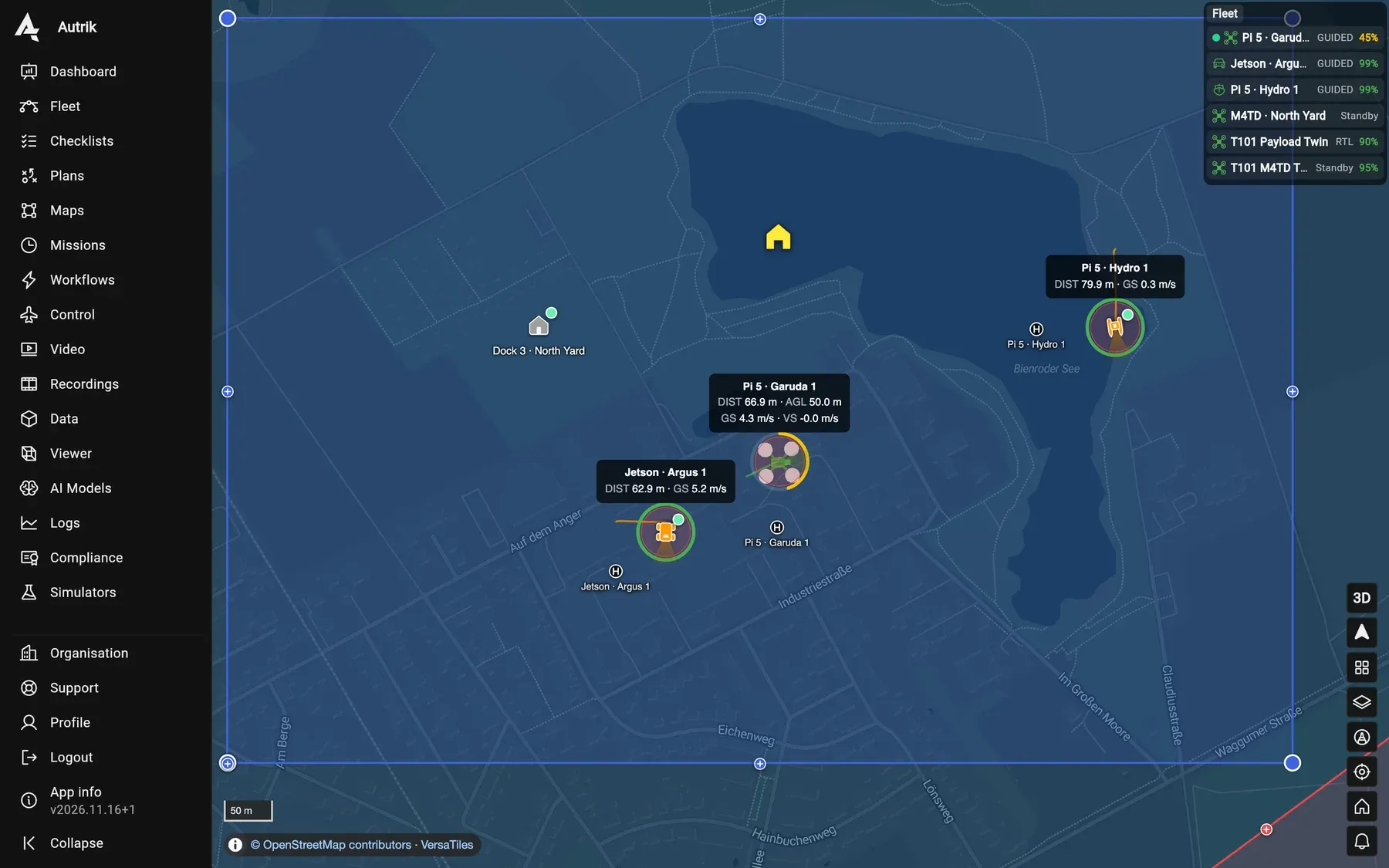
- One operations layer across mixed hardware. Inspection docks, delivery aircraft and response drones will not all come from one maker, and should not. They have to appear on one map, under one set of rules, with one record.
 3. People who trust it. The residents, who must see what the network is for before they see a delivery of takeaway food. And the staff, who must see a career in it, not a threat.
Where we fit
We build the operations layer for exactly this kind of network: one place where docks, drones and robots from different makers are planned, flown, monitored and recorded, with automated operations on a schedule or an alarm, a remote operations centre that can also be run as a service, the health of every aircraft from its logs, a flight simulator to rehearse missions and train crews, and the compliance record the authorities ask for. For the work itself, see inspection and monitoring, public safety, delivery and training.
The drone was never the hard part. The network is, and a city is the best place to build one.
Zipline figures are as published by Zipline (deliveries and autonomous miles, January 2026). The city arithmetic is an illustration, not a plan for any particular city.