



· Yogesh Khedar· Operations· 6 min read
The Drone Was Never the Hard Part
It's everything between "we bought drones" and "this runs every day". The map of that gap has five parts — plan, fly, analyse, manage, comply — and three jobs.
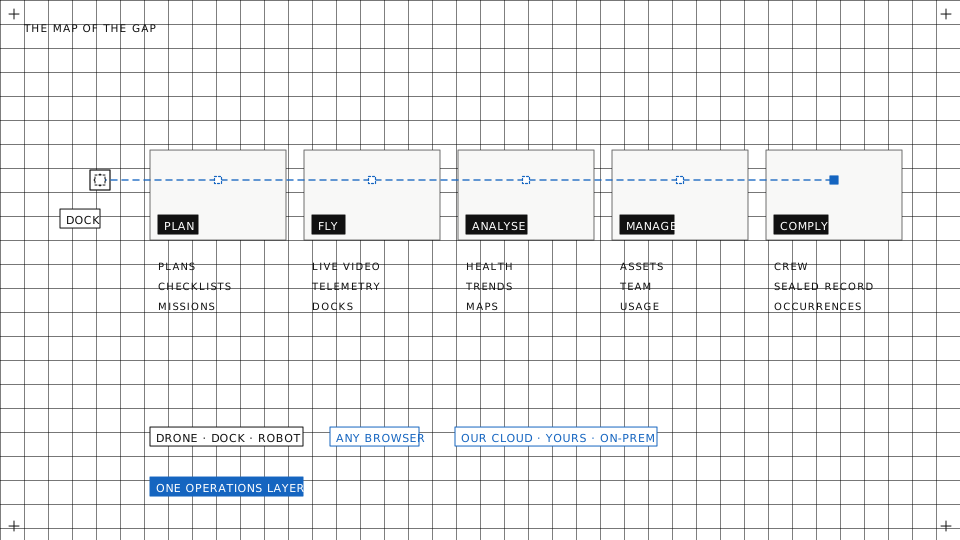
The drone was never the hard part. The aircraft are good. The pilots are good. What fails is everything between “we bought drones” and “this runs every day”, and it fails quietly: a flight that was never logged, a checklist that lives in one person’s head, a licence that lapsed, a log file nobody opened until the motor let go.
I have spent years in that gap, first building aircraft, now building the software that runs them. This is the map I wish we had on day one.
The gap
A drone program starts with a purchase and a demo flight. The demo is the easy part. Then the program has to do the same thing on a Tuesday in November, with a different pilot, a different aircraft, a client waiting for the result and an auditor who may ask about it in March.
That is when the tools multiply. A planning app from the aircraft maker. A log viewer from the autopilot’s community. A video tool for the live feed. A spreadsheet for the crew’s licences and another for the batteries. A dock console, if there is a dock. One fleet, five tools, ad-hoc operations, and one person holding it together, usually the chief pilot, usually unpaid for the part of the job that matters most.
This is why fleets are the exception and single aircraft the rule: the overhead of running one aircraft well is bearable by hand, and it grows with every aircraft, every pilot and every site. The gap does not close by buying more drones. It closes when the overhead becomes software.
The map: five parts
Plan, fly, analyse, manage, comply. Each one is a question a program has to answer every day, whether it has software for it or not.
Plan
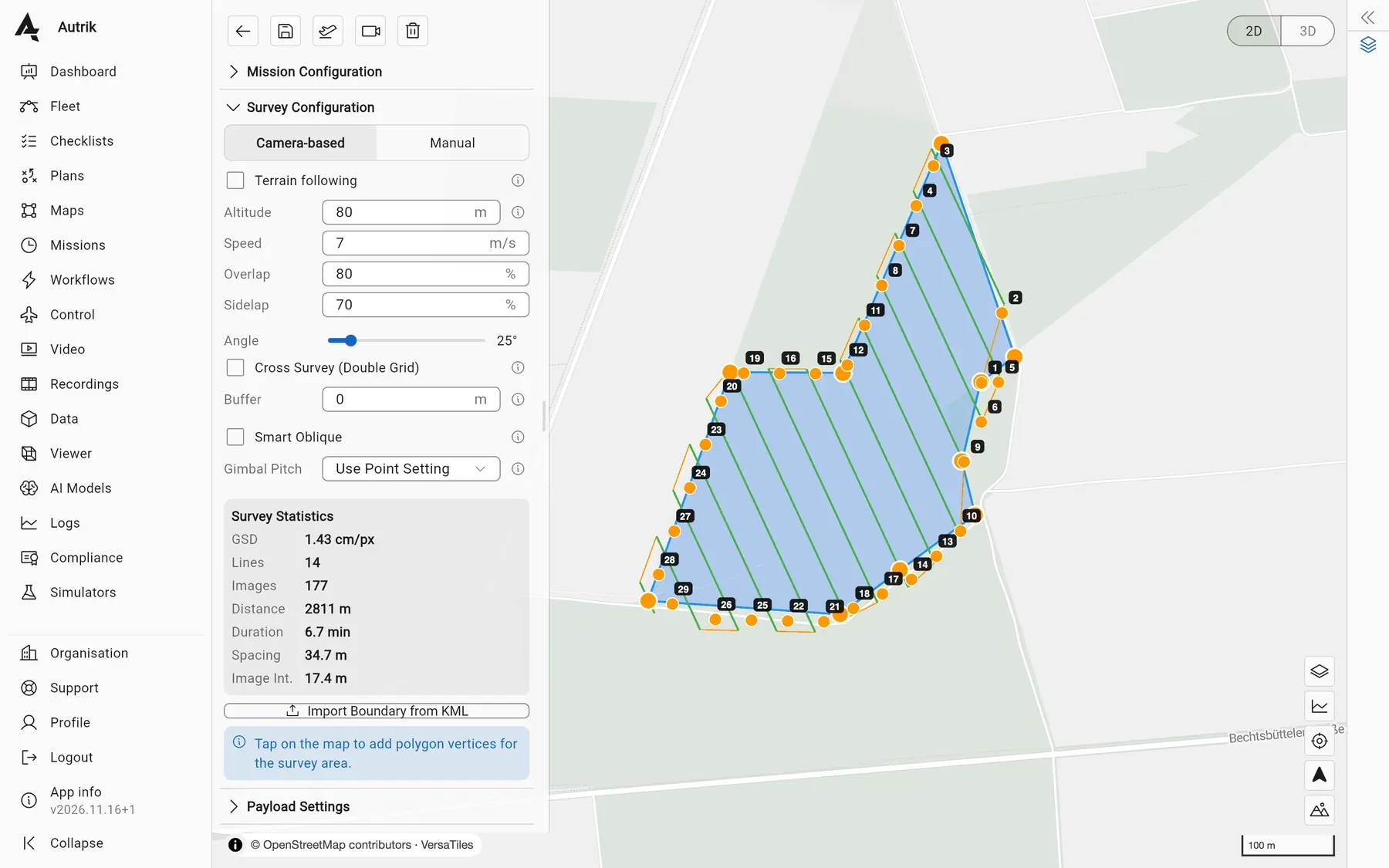
Every flight planned before take-off, in a form the next person can read. Survey, facade and waypoint plans that know the camera, the overlap and the ground. A checklist for each aircraft type, ticked on the device, not remembered. Missions on a schedule or started when needed, so a dock flight at 03:00 is a plan, not a hope.
Without it: the plan is in the pilot’s head, the flight is repeated by someone else slightly differently, and two months later nobody knows which version the client’s map came from. On AutrikOS this is the mission planner and the checklists.
Fly
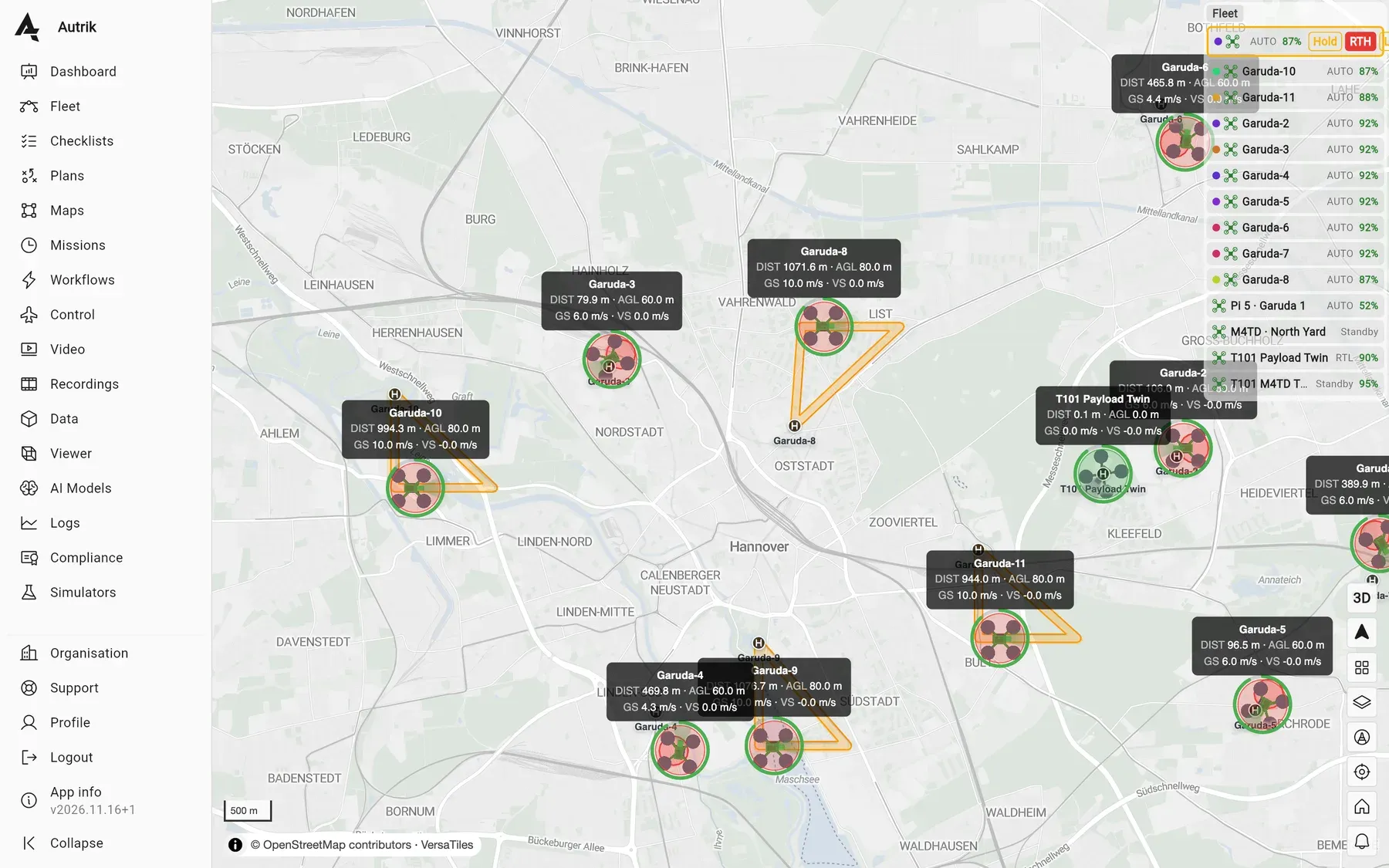
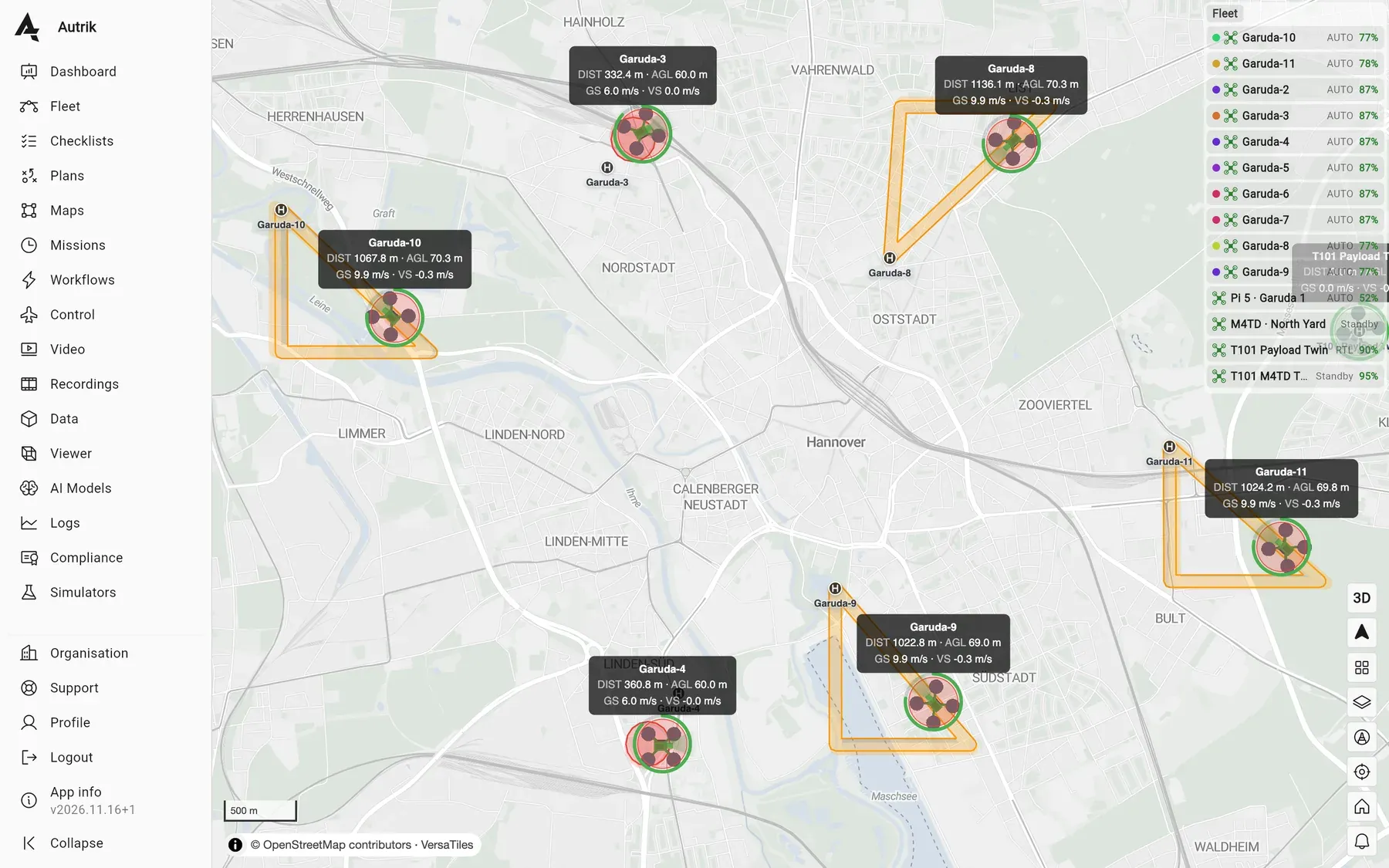
Control, telemetry and live video from any unmanned system, in a browser, so the person who needs to see the flight does not need the controller in their hand. Docks, robots and external sensors on the same screen as the aircraft. Fly-to, point of interest, and multi-operator, multi-system control as plain actions, not as a workaround.
Without it: the operation lives on one screen in one vehicle, and the people who should be watching, the incident commander, the client, the next pilot, are on the phone asking what they can see. This is streaming and the remote operations center.
Analyse
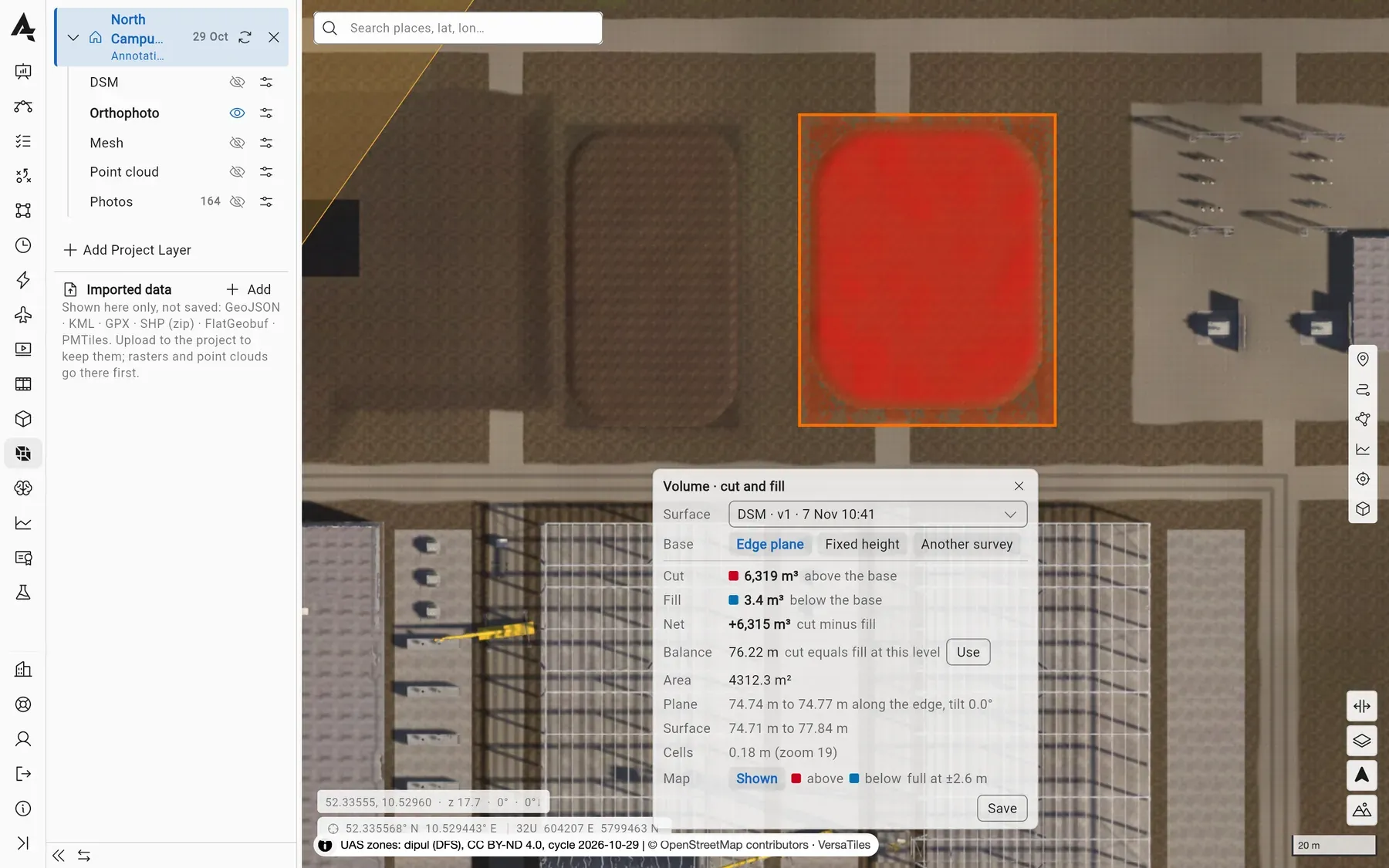
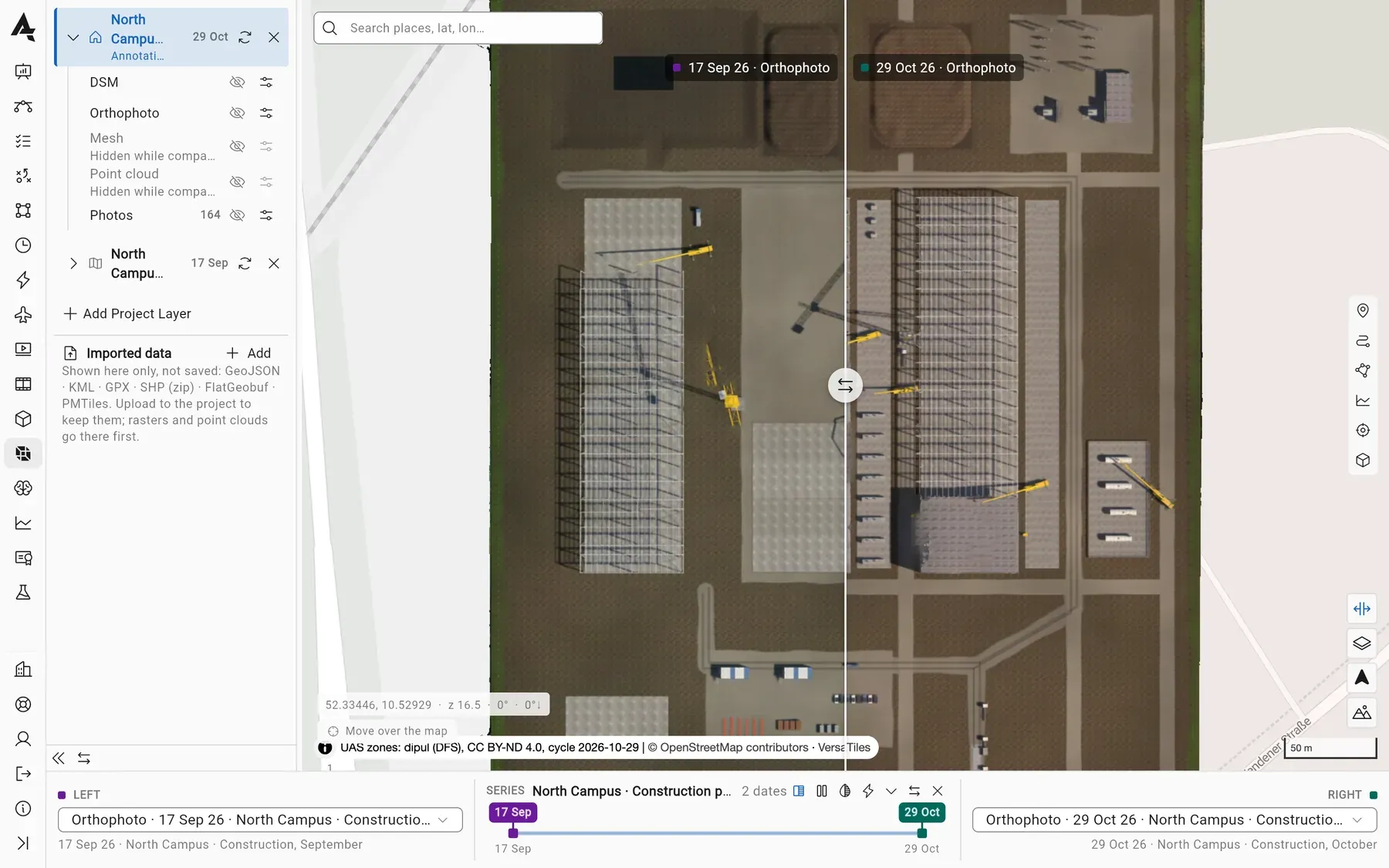
Every flight teaches the fleet, if what it brought back is read. Maps, meshes and volumes from each survey, processed where the data landed. Two dates of the same site side by side, the result shared with the client as a link. AI models on the edge and on the data, so the thing to look at is found before someone scrolls for it.
Without it: the imagery sits in a folder named after the date, and the answer the client paid for is a week of someone’s desk time. This is mapping and intelligence.
Manage
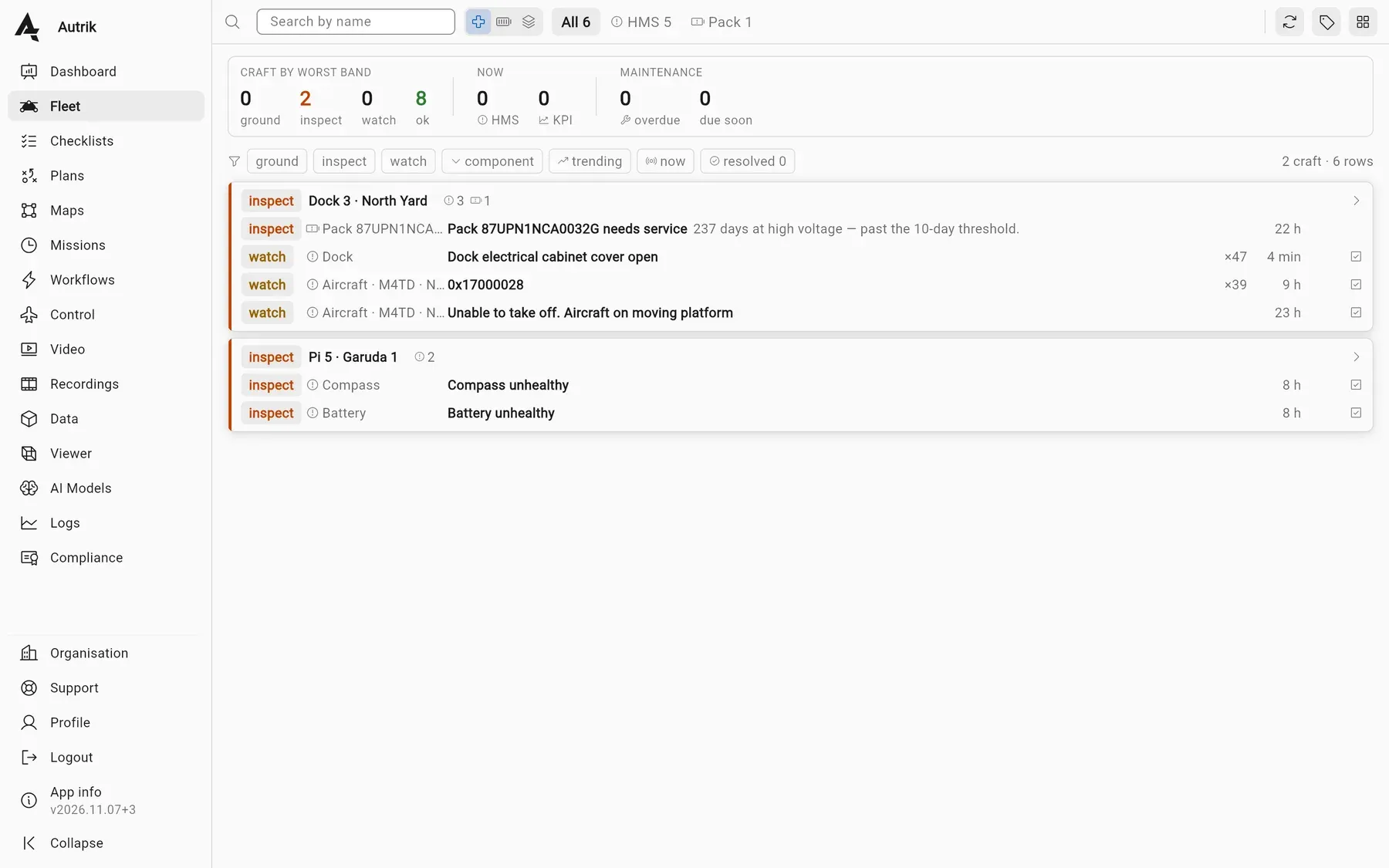
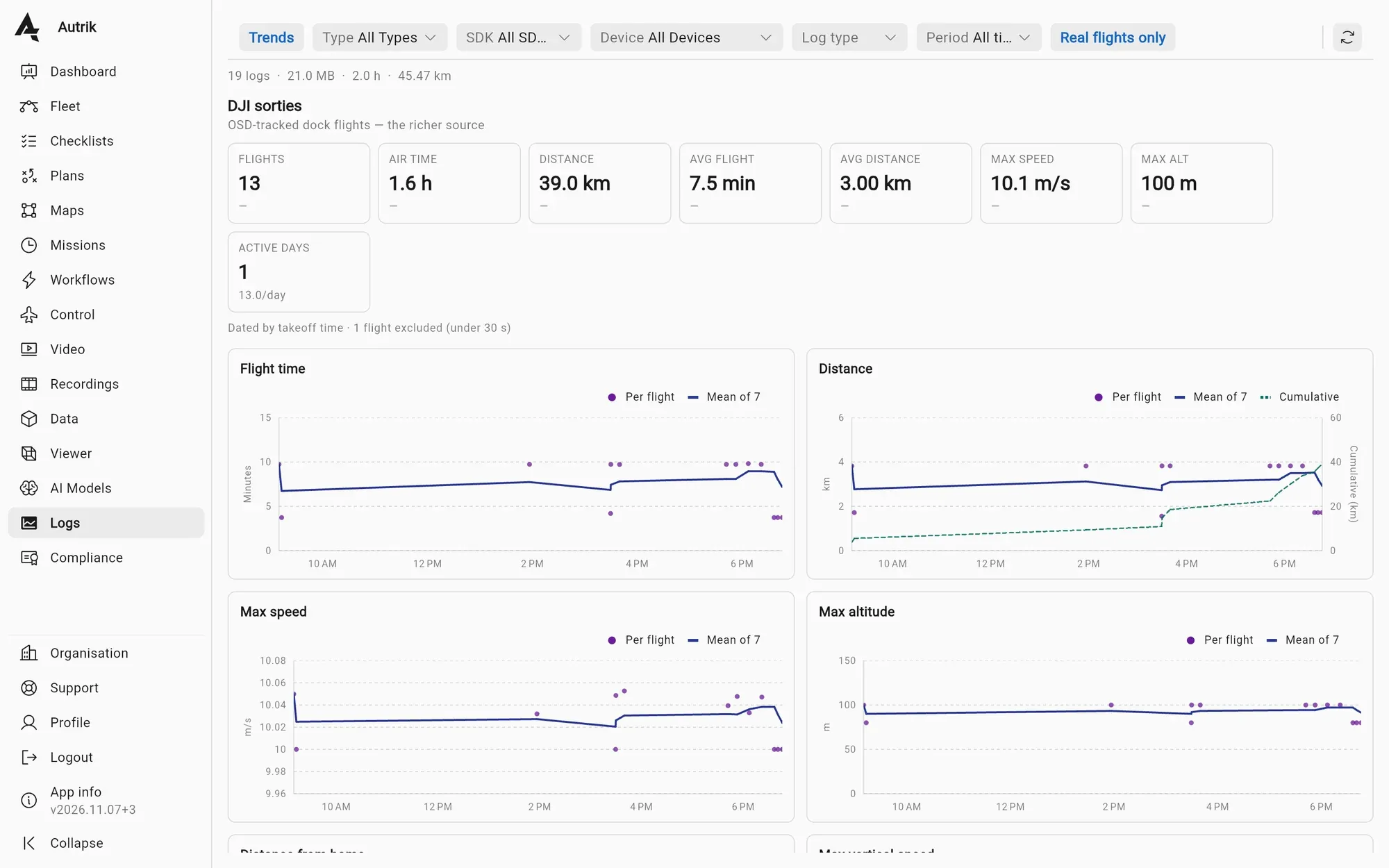
One fleet, one place: aircraft, docks and robots as assets with their history, and their health from the log, worst first: propulsion, vibration, navigation, battery, links, flight controller, companion. Trends as charts across every flight, so a motor whose output spread has crept up over twelve sorties is a work order, not a surprise. The team with roles, usage and reports. The boring part, and the part every grown-up operation runs on.
Without it: the asset list is a spreadsheet that was right in spring, and the logs are archives, kept because they should be and opened after the crash. This is fleet management, fleet health and log insights.
Comply
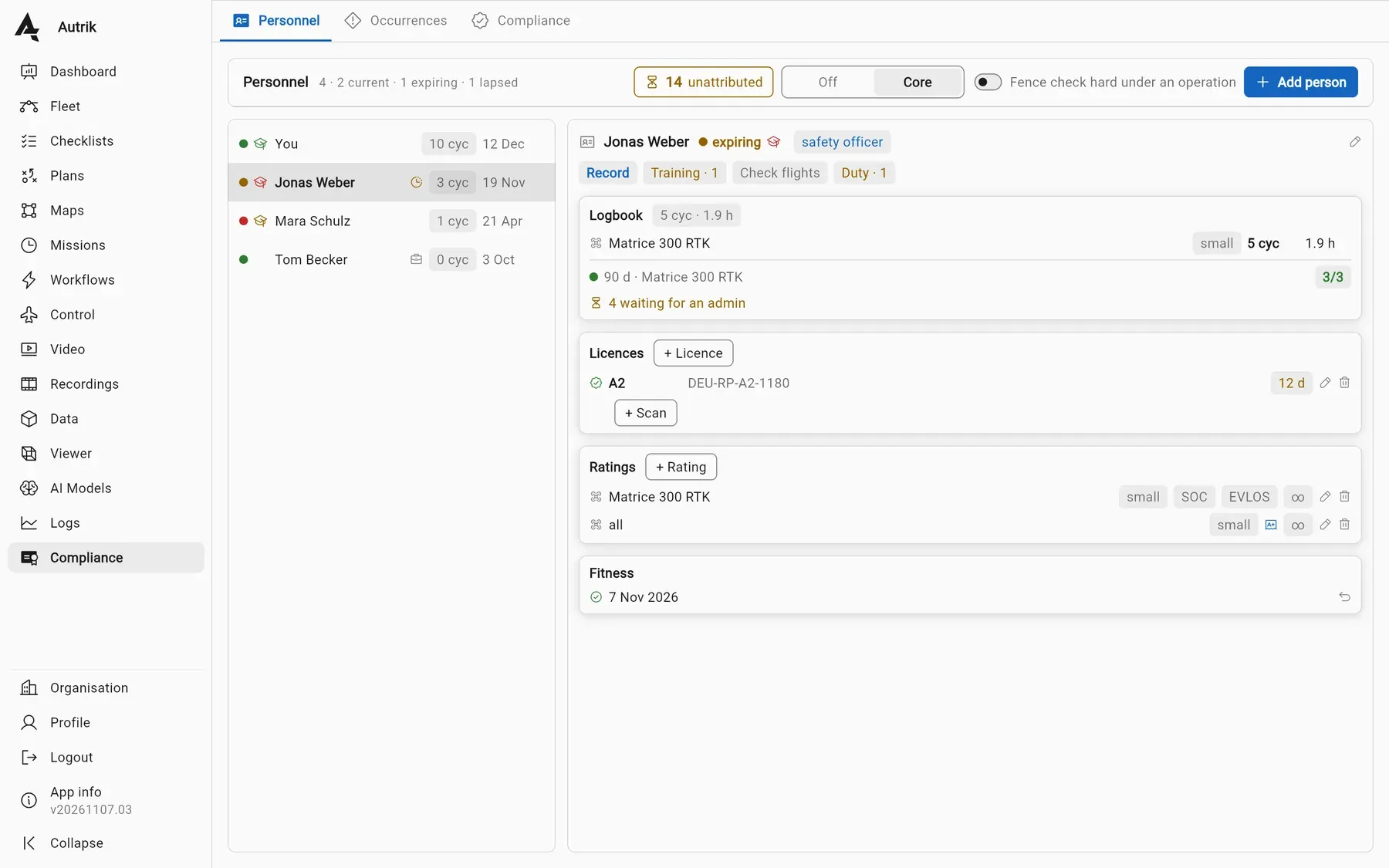
The record the auditor asks for, kept as a by-product of flying rather than as a project in March. Crew licences, ratings, logbook recency and fitness. Every flight sealed when it ends, hash-chained so the record can be shown to have not been touched. SORA, BARS and EGRED 2 answered from that same record, not rebuilt in a binder for each.
Without it: compliance is a binder, assembled under pressure, from memory. This is compliance.
Three jobs
Five parts are a menu. In practice a program has three jobs, and the parts pair up:
- Run the flight. Plan and fly. Planned first, flown live in a browser, for any drone, dock or robot.
- Run the fleet. Analyse and manage. Surveys become maps, volumes and answers; assets, health, team and usage live in one place, not five.
- Keep the record. Comply. Crew and every flight sealed, SORA, BARS and EGRED 2 ready before the auditor asks.
A program that does these three on a Tuesday in November, with the pilot who happens to be on shift, is running. One that does them on demo day is not yet.
One system, any drone, anywhere
The five parts only work as one system if they share one record: the same flight is the plan, the live view, the log, the asset’s history and the sealed record. That is the design decision behind AutrikOS. One onboard client on the drone, dock or ground robot, whatever its maker; one console in the browser; one record underneath. It runs in our European cloud, in yours, or on-premise on your own hardware, as the same software (security and deployment).
Three questions for you today
If you run a drone program, or are about to, three questions tell you where the gap is:
- Can someone who was not there reproduce last Tuesday’s flight from what is written down?
- If the auditor asked for the crew’s recency and the sealed record of one flight today, how many hours would it take?
- Which aircraft in the fleet is closest to a motor failure, and how do you know?
If any of the three takes more than a minute to answer, that is the part of the map to close first.
Running or setting up a drone operation, or building aircraft that should work in a fleet? Tell us what you fly and what you need.